AWS Lambda Patterns
Hi, I'm Harshal Jethwa. A Cloud & DevOps Engineer. I am a 6th Semester student for Bachelor's in Information Technology from CHARUSAT, Changa, Anand.
📚 Currently, I am learning Cloud Computing. I am also an AWS-certified Cloud Practitioner, Microsoft Certified: Azure Fundamentals and currently learning Google-certified Cloud Digital Leader. I also did a 2 monthly internship in cloud Computing from BISAG. There, I did a Web and Cloud Based Project.
Also, I would like to share my learnings & enjoy mentoring folks in the field of cloud. Passionate and keen to learn about new technologies. Enjoying my work by combining my passion and my work together, currently exploring Multi-cloud, DevOps, and Web development domains.
💪🏽 Communication | Leadership | Time Management | Critical Thinking | Public Speaking
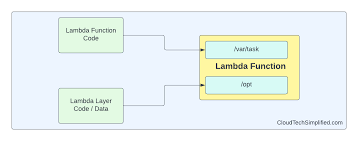
AWS Lambda has become the backbone of modern serverless applications. It allows developers to run code without managing servers, scaling automatically to handle thousands of concurrent requests. Each Lambda function runs in its own isolated environment, complete with runtime, memory, and temporary storage.
When demand increases, AWS automatically provisions new environments, ensuring elasticity and high availability. This frees developers from capacity planning and infrastructure overhead while maintaining security through strict environment isolation.
With this foundation, let’s explore some of the most widely used Lambda architecture patterns in real-world production systems.
1. Command Pattern
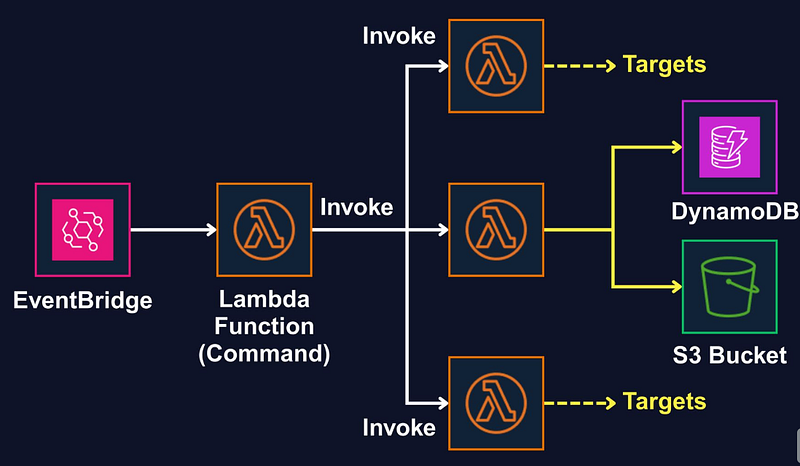
In this pattern, a Lambda function acts as a command handler — receiving a trigger, validating the request, applying business rules, and orchestrating downstream actions. The function centralizes decision-making, while delegating actual work to other Lambdas or services.
✅ Best suited for:
- Small to medium workflows where AWS Step Functions would add unnecessary complexity
- Scenarios requiring a single entry point to enforce rules before delegating tasks
- Applications where clear separation between control logic and worker logic is needed
🔹 Example use case:
- An Order Submission Lambda validates the order, stores the record in a database, and then triggers worker Lambdas for payment, notifications, and updating third-party systems.
This ensures clean separation of concerns while maintaining a clear orchestration point.
2. Messaging Pattern
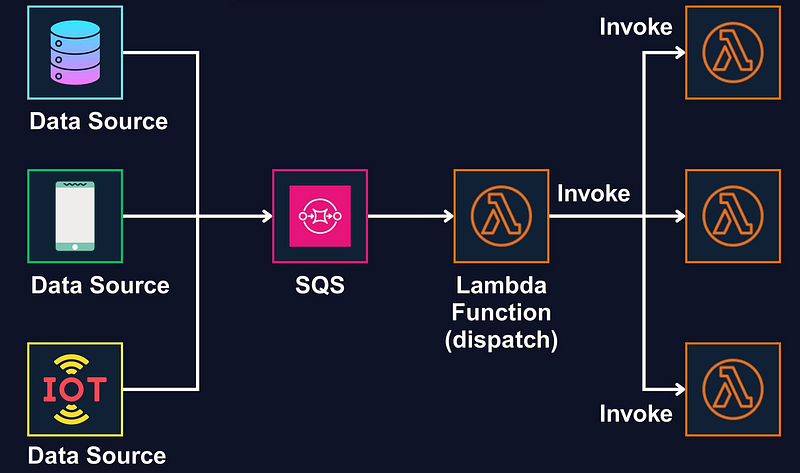
Here, producers publish messages to a queue or stream (e.g., SQS, SNS, Kinesis), and a Lambda consumes them asynchronously. This decouples services, absorbs traffic bursts, and ensures reliable retries.
✅ Best suited for:
- Bursty or unpredictable workloads
- Isolating slow or unreliable downstream services
- Offloading heavy tasks from the synchronous request path
- Guaranteeing at-least-once delivery with retry and dead-letter queue (DLQ) support
🔹 Example use case:
- A checkout request emits an OrderPlaced event to SQS. A Lambda consumes it, reserves inventory, processes payment, and publishes further events. If processing fails, retries occur automatically, and unrecoverable events are captured in a DLQ.
This design improves resilience and decouples producers from consumers, enabling independent scaling.
3. Fan-Out Pattern
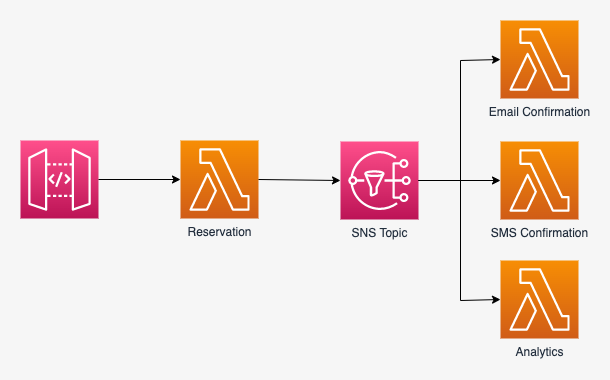
Fan-out is one of the most powerful and widely adopted Lambda patterns. A single event triggers multiple downstream processes in parallel. This is typically implemented with SNS topics or EventBridge, where a single published event can invoke multiple subscribers.
✅ Best suited for:
- Workflows that need to trigger multiple independent actions from the same event
- Real-time event-driven architectures
- High-scale applications requiring parallel processing
🔹 Example use case:
- An OrderPlaced event published to SNS triggers multiple Lambdas:
- One updates the inventory system
- Another sends a confirmation email
- Another updates analytics pipelines
This approach improves scalability and allows new consumers to be added with zero code changes to the publisher.
AWS Lambda enables powerful serverless patterns that simplify application design while ensuring scalability, fault tolerance, and agility.
- Use the Command Pattern for centralized orchestration.
- Adopt the Messaging Pattern to decouple and stabilize workloads.
- Leverage the Fan-Out Pattern for scalable, event-driven parallelism.
These patterns form the foundation of production-grade serverless architectures and can be combined to build complex, resilient systems with minimal operational overhead.
Follow me :
Linkedin: https://www.linkedin.com/in/harshaljethwa/
GitHub: https://github.com/HARSHALJETHWA19/
Twitter: https://twitter.com/harshaljethwaa
Thank You!!!